AI Search Research Index 2026: 20 Studies Worth Citing
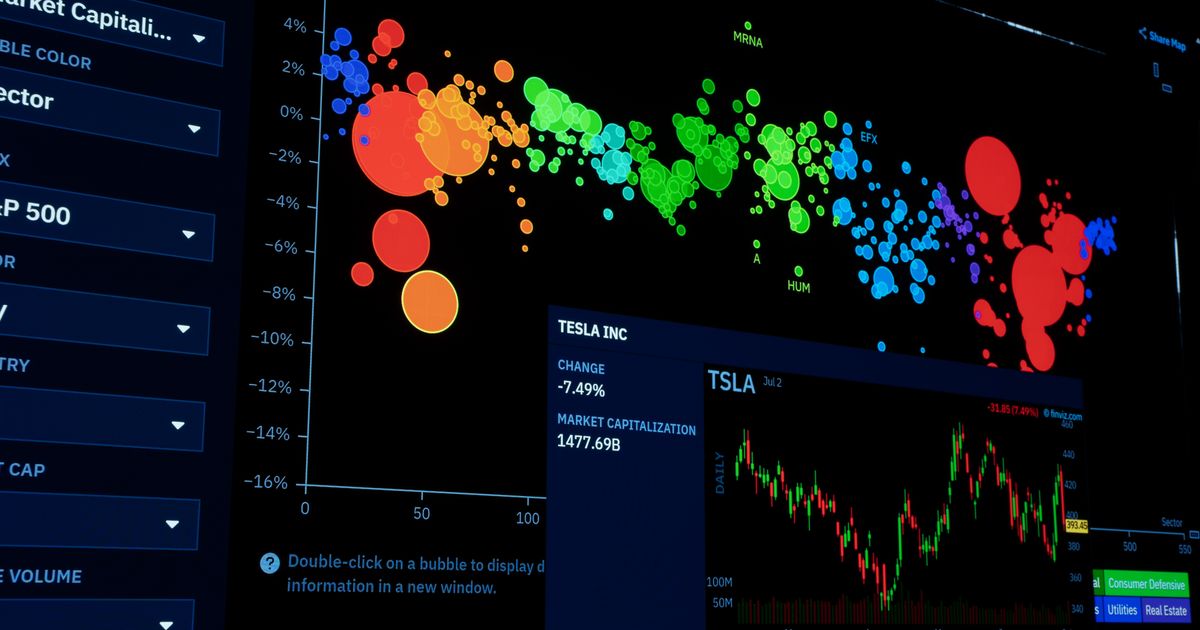
The useful AI-search bibliography tells you what a study can—and cannot—support. These 20 sources cover retrieval, citations, trust, crawling, publisher economics, and product discovery. Treat each finding as scoped evidence: a benchmark is not a market forecast, a survey is not behavior, and correlation is not causation.
Use this study when…
| Need to support a claim | Use this study |
|---|---|
| Testing whether content changes AI visibility | GEO (Aggarwal et al., 2023) |
| Comparing optimization strategies | Generative Engine Optimization (2025) |
| Auditing freshness | FreshLLMs (2023) |
| Measuring factuality | FActScore (2023) |
| Evaluating citation quality | ALCE (2023) |
| Measuring groundedness errors | RAGTruth (2024) |
| Describing real Google clicks | Pew browsing study (2025) |
| Estimating U.S. chatbot adoption | Pew ChatGPT survey (2025) |
| Showing AI encounters in browsing | Pew Web Browsing Data (2025) |
| Summarizing the research landscape | Stanford AI Index (2025) |
| Discussing news consumption shifts | Reuters Institute DNR (2025) |
| Explaining publisher search risk | Tow Center report |
| Discussing bot access and controls | Cloudflare AI Crawl Control |
| Assessing misinformation exposure | NewsGuard monitor |
| Explaining product-discovery behavior | Bain consumer-products report |
| Modeling retail-information adoption | Retail GAI adoption study |
| Testing embodied web research agents | WebArena |
| Testing browser-task agents | BrowserGym |
| Studying citation-producing browsing | WebGPT |
| Benchmarking retrieval citations | Citation benchmark (2024) |
Generative search and GEO experiments
1. Generative Engine Optimization (Aggarwal et al., 2023/2024). The KDD paper evaluates visibility interventions across nine datasets and multiple generative engines; its dataset sizes are reported in the paper. Use it to support the claim that phrasing, quotations, and source presentation can change generated-answer visibility. It is a controlled benchmark, not proof of ranking in every live product: paper.
2. Generative Engine Optimization: How to Dominate AI Search (2025). This comparative paper tests AI search against traditional search across engines and languages. Use it for a research hypothesis about engine-specific retrieval and “big-brand” effects, not a universal playbook. It is an arXiv experiment with disclosed methodology, not an independent market measurement: paper.
3. FreshLLMs (Vu et al., 2023). FreshLLMs introduces a benchmark for time-sensitive questions and reports task-level results over fresh-news and temporal datasets. Use it when asking whether an assistant can retrieve current information; do not convert benchmark accuracy into a claim about consumer satisfaction. Benchmark evidence is observational of model outputs under test prompts: paper.
4. WebArena (Zhou et al., 2023). WebArena evaluates agents completing realistic tasks on four replicated websites; the paper reports 812 task instances. Use it to support claims about end-to-end web research difficulty, not AI-search market share. It is a controlled benchmark: paper.
Citations and verifiability
5. FActScore (Min et al., 2023). FActScore decomposes long-form answers into atomic facts and checks them against reliable sources, reporting results across 920 biographies. Use it to define factuality and explain why a fluent answer can still contain unsupported claims. It evaluates generated text, not live search traffic: paper.
6. ALCE (Gao et al., 2023). ALCE introduces a benchmark for attributed language generation and evaluates citation correctness and completeness on ASQA, QAMPARI, and ELI5. Use it when distinguishing “has links” from “links actually support the sentence.” Dataset and evaluator limitations mean it is a benchmark, not a guarantee of citation reliability in production: paper.
7. RAGTruth (Niu et al., 2024). RAGTruth provides a corpus of hallucination annotations for retrieval-augmented generation and reports annotated samples in its paper. Use it to support claims about unsupported spans and faithful retrieval-grounded answers. It is an annotated research dataset; label quality and task distribution constrain generalization: paper.
8. Citation benchmark for retrieval-augmented generation (2024). This benchmark compares citation correctness and completeness across retrieval-augmented systems with disclosed prompts and evaluation sets. Use it to frame citation auditing as two questions—entailment and coverage—not a link-count contest. It is a model benchmark, so results vary with corpus and prompt: paper.
Trust and user behavior
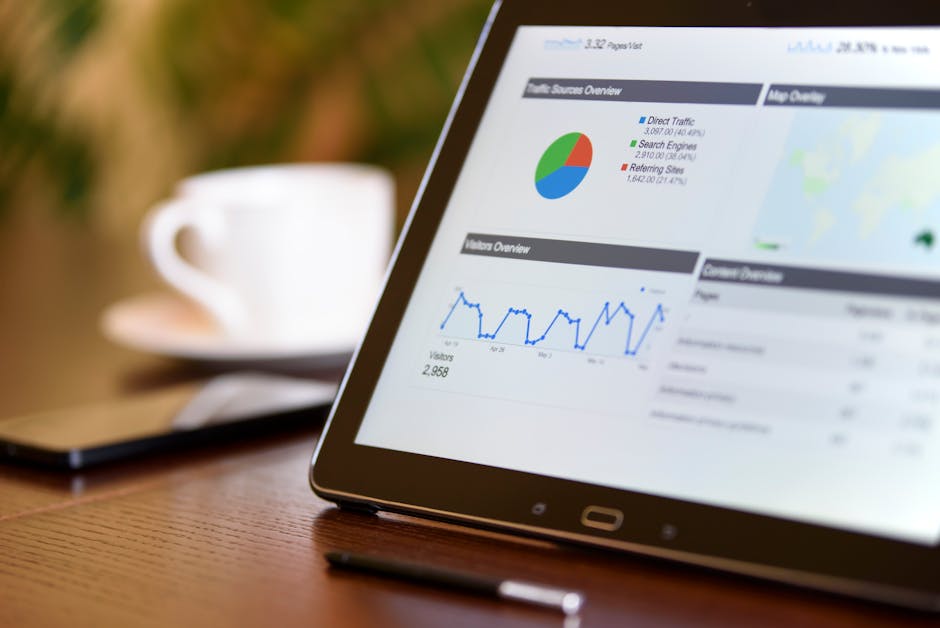
9. Pew, “Do people click on links in Google AI summaries?” (2025). Pew analyzed 68,879 Google searches from 900 U.S. adults’ browsing data in March 2025; traditional-result clicks occurred on 8% of visits with a summary versus 15% without. Use it for observed click behavior, not causality beyond that panel and product period: study.
10. Pew, “34% of U.S. adults have used ChatGPT” (2025). This survey reports 34% of U.S. adults had used ChatGPT, with subgroup results and field dates published by Pew. Use it for U.S. self-reported adoption; it cannot estimate frequency, quality, or AI-search-only usage. Survey evidence is not behavioral telemetry: study.
11. Pew, “What Web Browsing Data Tells Us About How AI Appears Online” (2025). The report combines metered browsing with survey context to describe where people encounter AI features online. Use it to separate exposure from deliberate use; it is descriptive and U.S.-sample specific, not a global forecast: study.
12. Stanford AI Index 2025. The annual report aggregates research, industry, policy, and technical indicators with documented sources. Use it as a map to the literature and for carefully defined trend context, not as one experiment. Aggregated indicators inherit the limits of their component datasets: report.
Crawler and publisher economics
13. Reuters Institute Digital News Report 2025. This annual survey reports country-level news-use, platform, and trust measures with sample and fieldwork details in its methodology. Use it for audience and referral context; it is survey evidence and does not isolate AI search as the cause of publisher outcomes: report.
14. Tow Center, “Journalism Zero: How Platforms and Publishers Are Navigating AI” (2025). This report documents publisher interviews and case studies about generative search, licensing, and direct audience relationships. Use it to support concrete publisher-risk examples, not a universal traffic-loss percentage. It is qualitative and observational: report.
15. Cloudflare, AI Crawl Control (2025). Cloudflare’s analysis uses network observations from sites on its platform to describe AI crawler activity and controls. Use it to explain bot-access economics and measurement choices; it cannot represent the whole web. It is first-party platform telemetry with selection bias: analysis.
16. NewsGuard, AI Misinformation Monitor (January 2025). NewsGuard tests 10 leading chatbots against a defined set of false narratives in seven languages and publishes its protocol and results. Use it for exposure and response-quality examples, not prevalence among all user queries. It is a constructed test set, not a random sample of the web: monitor.
Consumer and product discovery
17. Bain, “The Future of Consumer Products in the Age of AI” (2025). Bain combines consumer research and industry analysis to explain how AI tools may mediate product research and recommendations. Use it for a strategic hypothesis and cited survey findings; projections are forecasts and the report is not a randomized experiment: report.
18. “Framework for adoption of generative AI for information search of retail products and services” (2024). This peer-reviewed study models psychological drivers of GAI adoption for retail information search; sample size and model specification are in the published article. Use it for adoption mechanisms, not current market share. It is survey/model evidence: article.
19. BrowserGym (Deng et al., 2023). BrowserGym evaluates web agents across diverse browser tasks with a reproducible environment and reported task suite. Use it when discussing whether an agent can complete product-research actions, not whether shoppers prefer agents. It is a controlled benchmark: paper.
20. WebGPT (Nakano et al., 2021). WebGPT studies language models browsing and citing web pages, with human feedback and comparison experiments described in the paper. Use it as foundational evidence for citation-producing browsing, not as evidence about today’s ChatGPT Search product. It is an early controlled study with dated models and tasks: paper.
Selection criteria
I selected sources with named authors or institutions, a public method, an inspectable dataset or sample, and a question that maps to AI search. I excluded unattributed “AI visibility” charts, vendor claims without denominators, and forecasts presented as measurements. A bibliography earns trust by preserving those exclusions.
How to cite without overstating
Name the population, date, and design before the number. Say “Pew observed 68,879 searches in its U.S. panel” (Pew Research Center) rather than “AI search reduces clicks everywhere.” Say “Bain forecasts” rather than “AI will.” For benchmarks, report the task and metric; for surveys, report self-report; for platform telemetry, name the platform’s selection boundary. If a source does not publish a sample size, do not invent one.
Update policy
This index is dated 2026-08-30. AEOeye will review it every six months, add primary studies with disclosed methods, and label product-dependent results with their observation window. Older foundational papers remain when their method still answers a useful question; they are not silently rewritten to sound current.
If you need to know whether your brand is actually cited in buyer questions, run a free AEOeye audit. Research explains the system; an audit shows your evidence.
FAQ
What is the best starting paper for generative engine optimization?+
Start with Generative Engine Optimization (KDD 2024): it defines the problem and tests visibility interventions, while warning that results depend on engine and query.
Which study measures real Google behavior rather than opinions?+
Pew Research Center's 2025 browsing-data analysis follows 68,879 Google searches from 900 U.S. adults; it is observational, not a randomized test.
Can these studies prove that AI search caused traffic loss?+
Usually no. Most publisher and clickstream reports are observational; use them to describe association and direction, not to claim universal causation.
How often should this research index be updated?+
Review it every six months and replace superseded product studies, while preserving older papers when they remain methodologically useful.
Sources
- 1.GEO: Generative Engine Optimization
- 2.Generative Engine Optimization: How to Dominate AI Search
- 3.FreshLLMs
- 4.FActScore
- 5.ALCE
- 6.RAGTruth
- 7.Pew AI summaries browsing study
- 8.Pew Americans and AI
- 9.Pew What Web Browsing Data Tells Us About AI
- 10.Stanford AI Index 2025
- 11.Reuters Institute Digital News Report 2025
- 12.Tow Center Journalism Zero
- 13.Cloudflare AI Crawl Control
- 14.NewsGuard AI misinformation study
- 15.Bain Future of Consumer Products
- 16.Generative AI for retail information search
- 17.WebArena
- 18.BrowserGym
- 19.WebGPT
- 20.AI Search citations benchmark
Is AI recommending you?
Run a free AI visibility audit and find out in under a minute.