AI Visibility Tracking Tools: The 7 Checks Before You Pay for One
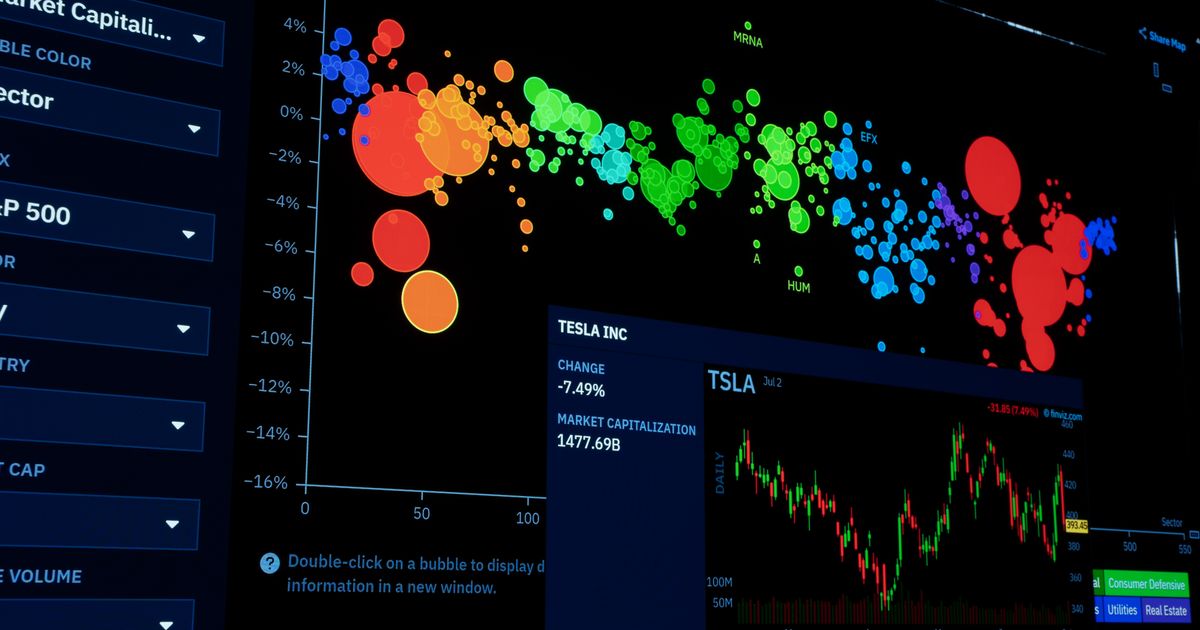
The best AI visibility tracking tools do not merely count brand mentions. They show whether an answer engine could find the brand, chose to recommend it, placed it ahead of competitors, and cited evidence that a buyer could inspect.
That distinction matters because “mentioned” is a weak success condition. A brand appearing fifth in a list after the model searches the web has a different visibility problem from a brand recalled first without retrieval. Any product that compresses both outcomes into one glossy percentage is hiding the decision you actually need to make.
This guide gives seven checks for separating useful measurement from expensive theater. If you want adjacent category context first, compare AI brand monitoring tools with AI rank tracking; they overlap, but neither label guarantees recommendation-level evidence.
What should an AI visibility tracker prove?
An AI visibility tracker should prove four things: what was asked, which engine answered, where the brand appeared, and what evidence supported the answer. If you cannot inspect those four layers, you are buying a dashboard’s interpretation rather than a reproducible audit.
Traditional rank tracking observes a relatively stable result page. Generative answers are assembled from model knowledge, retrieved sources, prompt wording, and product-specific behavior. Even the available model families change over time, as the official OpenAI model documentation makes clear, so a vendor must timestamp both the engine and the run.
A credible output lets you distinguish:
- findability: could the engine reach or recognize the site?
- inclusion: did it name the brand at all?
- recommendation: did it present the brand as a suitable choice?
- position: was the brand first, later, or behind a competitor?
- grounding: did the answer search, cite, or rely on model memory?
Anything less is mention monitoring with an AI label attached.
Check 1: Does it test the engines buyers actually use?
Choose a tool that tests multiple answer systems separately, not a single model presented as “AI visibility.” ChatGPT, Claude, Perplexity, Gemini, and Google AI Overviews have different interfaces, retrieval patterns, model lineups, and opportunities to influence a buying decision.
Engine coverage must be explicit at report level. A blended score can be useful only after the tool shows the underlying answers; otherwise, a strong result in one engine can conceal complete absence in another. Anthropic, for example, documents multiple Claude models with different capability profiles in its official model overview.
We would refuse to pay for a tracker that says “major AI platforms” without naming them. We would also reject screenshots as the only evidence: they are hard to compare, search, or audit later.
Check 2: Are the prompts buyer questions rather than vanity queries?
The prompt set should represent purchase decisions, comparisons, objections, and category discovery—not just searches containing the brand name. Branded prompts test recognition; non-branded buyer prompts test whether the engine recommends the company when it has to choose among alternatives.
A balanced prompt set includes questions such as:
- “What are the best tools for [job]?”
- “Which [category] works for [specific customer]?”
- “What is a good alternative to [competitor]?”
- “Compare [category options] for [constraint].”
- “Which vendor solves [pain point] under [budget or workflow]?”
Prompt wording can change an answer, so the tool should preserve exact text rather than reporting only a topic label. The original Generative Engine Optimization paper formalized GEO as improving visibility in generative-engine responses; that is a response-level problem, not a keyword-volume costume party.
Check 3: Can it separate being found from being recommended?
A useful tracker must show a visibility ladder, because discovery and endorsement are not the same event. The most actionable sequence is: not findable, findable but omitted, mentioned behind competitors, recommended after search, and recalled from model knowledge without search.
What did AEOeye internal data reveal?
AEOeye internal data shows that absence is often an earlier-stage problem than ranking. Across 90 completed AI visibility audits, roughly a third of brands could not get named at all even when the AI could reach their site; that makes “improve average position” the wrong first prescription for many teams.
The observed visibility-ladder counts were:
| Visibility level | Meaning | Brands |
|---|---|---|
| Level 1 | Site not findable by the AI | 7 |
| Level 2 | Findable but never recommended | 11 |
| Level 3 | Mentioned behind competitors | 6 |
| Level 4 | Recommended first, after the AI searches | 13 |
| Level 5 | Named from the model’s own memory, no search | 19 |
Methodology: AEOeye classified outcomes from 90 completed audits using the five-level ladder above, based on whether the tested AI could find, mention, rank, or recall the audited brand. Limitation: these counts cover recorded ladder classifications, not a randomized sample of all businesses; the five reported groups total 56, so this distribution should not be treated as a population benchmark or forced to account for every completed audit.
That incompleteness is worth stating. First-party data becomes less useful, not more, when a vendor smooths over a denominator problem.
 Photo by Daniil Komov on Pexels
Check 4: Does the report preserve citations and source evidence?
The report should capture cited URLs, source domains, and the claim each source appears to support. A brand recommendation without source evidence may be unstable, while a competitor repeatedly supported by authoritative pages reveals a concrete content and entity gap.
Do not confuse structured data with a guaranteed AI citation switch. Google says structured data gives explicit clues about a page’s meaning and can enable eligible search features, but it does not promise recommendation in an AI answer; see Google’s structured data introduction.
The tracker should therefore connect observation to action: missing product facts, unclear category language, weak comparison coverage, or absent third-party corroboration. For tooling patterns that support those fixes, use the AI search engine optimization tools guide, not a generic SEO checklist.
Check 5: Are repeated runs treated as samples, not absolute truth?
Good tools treat each generated answer as an observation with a timestamp, not an eternal rank. They repeat important prompts, retain answer-level evidence, and disclose enough methodology for you to tell genuine movement from normal variation.
A single run can answer “what happened now?” It cannot establish a trend. Demand engine name, model or product label when available, location or language settings, prompt text, run time, and whether web retrieval occurred.
This is also why daily precision charts can be overhyped. More plotted points do not repair a weak prompt set. A transparent monthly audit can beat a continuous monitor if the monitor repeatedly measures irrelevant prompts and then averages away the differences.
Check 6: Does one score hide the diagnosis?
A composite score is acceptable as a summary, but never as the primary evidence. The tool should let you move from the score to each engine, prompt, answer, competitor, citation, and ladder stage without guessing how the number was produced.
Use this buying comparison:
| Vendor output | Useful? | Why |
|---|---|---|
| One visibility percentage | No | No diagnosis or reproducible evidence |
| Mention count by engine | Partly | Shows inclusion, not recommendation quality |
| Prompt-level answers and citations | Yes | Exposes why the outcome occurred |
| Ladder stage plus competitors | Yes | Points to the next practical intervention |
| Guaranteed “AI ranking” | No | Pretends generated answers behave like fixed SERPs |
Schema can help machines interpret entities and page types, but vocabulary alone is not proof of visibility. The Schema.org documentation describes shared structured-data vocabularies; it does not certify that a model will recommend the marked-up organization.
Check 7: Does the price match the decision you need to make?
Pay for the evidence needed to make the next decision, not for an endless dashboard by default. If you are establishing a baseline, a one-time multi-engine report can be more rational than a subscription whose recurring charts nobody acts on.
Before paying, ask:
- Are the full prompts and raw outcomes visible?
- Are all named engines actually tested?
- Can I distinguish retrieval from model memory?
- Are competitors and citations attached to specific answers?
- Is the methodology honest about uncertainty and missing data?
- Can I export or retain the result after payment?
AEOeye offers a free audit preview and a one-time $29 full report across ChatGPT, Claude, Perplexity, Gemini, and Google AI Overviews. There is no subscription. That model fits a baseline or periodic checkpoint; teams needing continuous monitoring should judge recurring products using the same seven checks and compare the options in this AI search optimization tools buyer’s guide.
Which tool should you choose?
Choose the AI visibility tracking tool that exposes the chain from buyer prompt to engine answer to recommendation position to cited evidence. Coverage breadth matters, but transparency matters more: five opaque engine scores are less valuable than inspectable answers that tell you what to fix.
The defensible buying rule is simple. Do not pay for a number you cannot interrogate, a trend built from undisclosed prompts, or a “rank” that ignores whether the engine searched the web. Start with a baseline, identify the lowest broken rung in the visibility ladder, make a targeted change, and retest the same decision-grade prompts.
That is what AI visibility tracking tools should do: shorten the distance between an uncertain answer and a specific action. Everything else is dashboard décor.
FAQ
What do AI visibility tracking tools measure?+
They test buyer-style prompts across AI answer engines and record whether a brand is found, mentioned, recommended, ranked against competitors, and supported with citations.
Which AI engines should a visibility tool track?+
At minimum, it should cover the engines your buyers use. For broad market coverage, that usually means ChatGPT, Claude, Perplexity, Gemini, and Google AI Overviews.
Can one AI visibility score be trusted?+
Only if the tool exposes the prompts, engines, run dates, raw answers, scoring rules, and repeatability limits behind it. A score without evidence is decoration.
How much does an AEOeye visibility audit cost?+
AEOeye offers a free audit preview and a one-time $29 full multi-engine report. There is no subscription.
Sources
Is AI recommending you?
Run a free AI visibility audit and find out in under a minute.